glossary
What Is a Board Portal? A Guide for Directors
Governance GlossaryPublished: December 13, 2022 Last Reviewed: March 12, 2026
Key Takeaways
- A board portal replaces email and shared drives for distributing board papers, agendas, and minutes.
- Key users include board administrators, company secretaries, directors, and CEOs.
- Core features include agenda building, document management, voting, action tracking, and secure access.
- Board portals improve meeting preparation time, security, and governance record-keeping.
- Organisations of all sizes benefit — from small community groups to large corporations.
A board portal, also known as board meeting software or board management software, is a secure platform that helps boards manage their meetings, documents, and decisions in one place. Directors use a secure login to access board papers, agendas, minutes, policies, and other governance documents from any device.
The core problem a board portal solves is simple: boards run on documents, and email is a poor tool for managing them. Attachments get lost, version control breaks down, there is no way to know whether directors have read the papers, and sensitive documents sit in personal inboxes with no access control. A board portal replaces this with a structured, secure system designed for how boards actually work.
Who uses a board portal
The primary users fall into two groups: administrators who prepare and distribute board materials, and directors who consume them.
Board administrators and company secretaries use the portal to build agendas, upload board papers, distribute meeting packs, record minutes and decisions, and manage the document library. The portal saves significant preparation time — one case study found administrators doubled their board meeting preparation speed.
Directors and board members use the portal to access board papers before meetings, review documents during meetings, vote on flying minutes or circular resolutions between meetings, and access past minutes and decisions for reference.
CEOs and senior executives who report to the board may also have portal access to upload reports, view the agenda, and track action items assigned to them.
Key features
Not all board portals offer the same features, but the core capabilities that matter for good governance include:
Agenda building
Create and structure the meeting agenda within the portal, attach relevant documents to each agenda item, and distribute the complete meeting pack to directors with one action.
Document management
Store all governance documents — constitutions, policies, bylaws, board charters, risk registers — in a secure, searchable library. Directors can access current versions without hunting through email.
Minutes and decisions
Record minutes linked to the agenda, track resolutions, and maintain a clear history of what the board decided and when.
Voting between meetings
Run flying minutes or circular resolutions through the portal, with a clear record of who voted and the outcome.
Action tracking
Assign action items from meetings and track their completion. This closes the loop between what the board decides and what actually gets done.
Audit trail
Track who accessed which documents and when. This matters for compliance and for demonstrating that directors fulfilled their duty of care.
Board registers
Many governance obligations require boards to maintain formal registers — a conflicts of interest register, a gifts and hospitality register, an attendance register, and in some cases a share register or member register. Managing these in spreadsheets is common but fragile. A board portal with built-in register functionality lets directors declare interests and log gifts directly in the platform, with timestamps and a clear audit trail. This makes it straightforward to demonstrate compliance during regulatory reviews or audits.
Benefits of a board portal
The practical benefits are straightforward:
- Faster preparation. Administrators spend less time compiling and distributing board packs. Directors spend less time searching for the right documents.
- Better security. Board papers contain sensitive information — financial data, legal advice, personnel matters. A portal provides encryption and audit trails that email cannot match.
- Improved governance. When minutes, decisions, and documents are linked and searchable, the board has a clear record of its governance activities. This matters during audits, regulatory reviews, or legal proceedings.
- Reduced waste. Boards that move from printed board packs to a digital portal eliminate the cost and environmental impact of printing hundreds of pages per meeting.
- Anywhere access. Directors can review papers on their laptop, tablet, or phone. This is particularly useful for directors who travel or serve on boards remotely.
Security and compliance
Board documents regularly contain sensitive financial data, legal advice, M&A discussions, and personnel matters. A breach of any of these can cause serious harm to the organisation and its stakeholders. Security is not optional for board communications.
A board portal protects documents with encryption both in transit and at rest. Role-based access control lets administrators set different permission levels for directors, observers, and support staff, so each user sees only what they need to see. Audit trails record who accessed which documents and when, providing a clear record for regulators and for the board itself.
Data sovereignty is another consideration. Where board data is hosted matters for compliance, particularly for Australian boards subject to local privacy law. A portal that stores data in Australian data centres keeps documents under Australian jurisdiction.
Generic cloud storage tools like Google Drive or Dropbox were not designed for board governance. While they offer basic file sharing and activity logs, they lack governance-specific workflows — role structures that reflect how boards operate, agenda-linked document management, and board-level retention and compliance controls. A purpose-built board portal addresses these requirements.
Choosing a board portal
When evaluating board portals, ask:
- Is it designed for governance, or is it generic file sharing?
- Can directors who are not tech-savvy use it without training?
- Does it support agenda building and minute taking within the platform?
- Where is the data hosted, and what is the security model?
- Does the pricing work for your organisation’s size and budget?
- What support is available when something goes wrong?
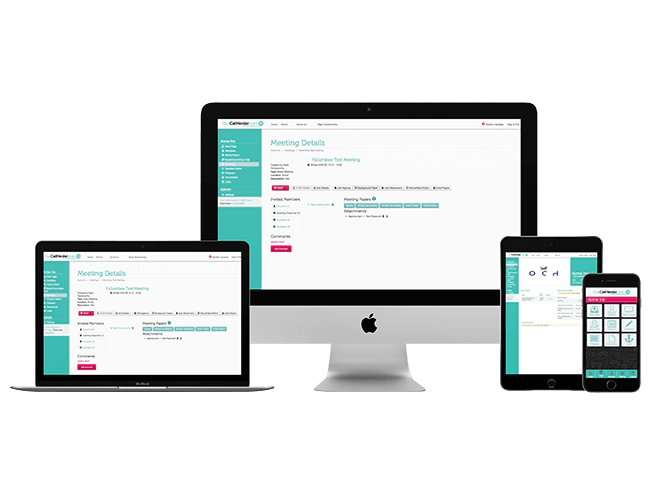
Our Cat Herder is a board portal built for boards. It handles agendas, minutes, documents, voting, and action tracking in one platform.
Frequently Asked Questions
Who are the primary users of a board portal?
The primary users of a board portal are board administrators, corporate secretaries, directors, board members, chief executive officers and other senior staff who report to the board of directors.
What is a board portal login?
A board portal login is a secure set of credentials that allow you to access your board portal and ensure that only those provided access can access your board portal and the information inside.
Are board portals suitable for all types of organisations?
Board portals are useful to organisations of all shapes and sizes. From small to medium business (SMBs), not-for-profits and associations through to huge multi-national corporations. All types of organisations, regardless of size or budget, can use and benefit from board portal software to improve their organisational governance.
Which is the best board portal?
Knowing which is the best board portal for you depends on many factors, from budgets to feature requirements and much more. The best way to find the best board portal for you is to do your research.
Further Resources: Board Portals
Tech in the Boardroom: Beyond the Board Portal
Streamlining the Work of the Board
Is The iPad Invited To Your Board Meeting?
Recommended Reading



Recommended Viewing



Author


- About
-
Better Boards connects the leaders of Australasian non-profit organisations to the knowledge and networks necessary to grow and develop their leadership skills and build a strong governance framework for their organisation.


Found this article useful or informative?
Join 5,000+ not-for-profit & for-purpose directors receiving the latest insights on governance and leadership.
Receive a free e-book on improving your board decisions when you subscribe.
Unsubscribe anytime. We care about your privacy - read our Privacy Policy .