leadership
The end of heroic leadership and the rise of empowerment
Published: March 15, 2026 Last Reviewed: March 16, 2026
Read Time: 6 minutes

Written in response to the theme of the 2025 Better Boards Conference, Superheroes: Doing More with Less, Deborah Johnston points out how the attributes needed to lead an organisation under today’s pressures (as indicated in the conference theme) couldn’t be more relevant for leaders. Her thoughts are are as relevant today as they were 6 months ago - leaders are under pressure to meet growing needs with shrinking resources, more compliance demands, and increasing complexity.
Today’s leadership ‘superpowers’ involve communication across the business, shared accountability, and adaptive teamwork. Rather than a single hero saving the day, we need diverse groups uniting around a shared purpose, exchanging information freely, and responding swiftly through collaboration. These are the powers every organisation needs today.
Moving beyond command and control
In today’s unpredictable world, empowerment is more than desirable; it’s essential. Leaders must move beyond traditional control and use the expertise of their workforces to create new solutions. McKinsey’s 2024 Organizational Health Index shows that authoritative leadership styles are in steady decline, while adaptive leadership styles are top drivers of organisational health and performance.
Empowerment demands cultural, structural, and behavioural shifts, as discussed in General Stanley McChrystal’s Team of Teams and Carol Dweck’s Growth Mindset. McChrystal’s insight, shaped in crisis settings, is that rigid hierarchies fail in fast-changing environments. He argues the leader needs to become a gardener, cultivating trust, clarity, and capability. No one person can effectively control everything anymore. Adaptability, transparency, and decentralised decision-making are now essential. This means letting go of the illusion that strong leadership means having all the answers.
Dweck’s Growth Mindset aligns with this. A ‘fixed’ mindset leads to fear of mistakes and blame culture. In contrast, a ‘growth’ mindset embraces experimentation, feedback, and learning – all foundations for empowered leadership. When teams are trusted to make decisions, share ideas, and take ownership, they respond faster to challenges and find smarter solutions.
It is rare for empowered organisations to emerge by chance. They are cultivated intentionally.
How empowerment creates a competitive advantage
Empowerment helps organisations respond faster, adapt better, and make smarter use of resources. When people are trusted with critical information, supported to make decisions, and encouraged to use their judgement, they act with greater confidence and initiative.
Teams become active problem-solvers, contributing frontline data and real-world insight, always looking for ways to improve. When budgets are tight, this can be a game changer. Empowered organisations are more responsive, more connected, and more effective than those still relying on slow, top-down control.
So how do you get there?
-
Set the conditions, not just the agenda: Clearly explain your organisation’s purpose, values, and direction, then let teams bring them to life. Rather than attempting to solve every problem – enable others to step forward. A CEO at a homelessness charity shared the goal of ‘safe, warm nights for all’, and invited staff to come up with low-cost ways to improve shelter access. A local team then trialled weekend intake hours, with great success.
-
Model the shift: Ask questions, show curiosity, and learn out loud. By breaking down silos and sharing ’leadership moments’, you show people that collaboration is safe – and expected. Instead of giving their opinion at a planning session, a board chair asked the team, ‘What are you hearing from community members that should shape our next steps?’ This encouraged honest input and fresh thinking.
-
Invest in cross-team trust and learning: Create regular, simple forums (weekly huddles or cross-team catchups) to share progress, discuss issues, and build trust across silos. A utility provider introduced a meeting for mid-level leaders across the business. They made strong connections, solved problems faster, and spread good ideas more effectively.
-
Build leadership at all levels: Encourage everyone across the organisation to develop confidence, communication, and decision-making skills. A group of frontline nurses identified recurring issues, collected data, and presented it to management. The hospital then implemented a new handover protocol, leading to improved patient outcomes.
-
Redesign incentives: Use key performance indicators that recognise collaboration, learning, and shared goals, not just individual output. An organisation replaced its ‘Employee of the Month’ award with ‘Team Shout Out,’ recognising whole teams who solved tough challenges together. It boosted morale, teamwork, and results.
-
Appoint catalysts, not controllers: Choose leaders who coach and empower others, rather than just managing tasks. A small environmental group promoted a team leader known for supporting junior staff in running meetings and trying new ideas. Under her guidance, innovation soared.
-
But leadership is my responsibility: Some leaders push back, saying, ‘It’s fine to delegate, but the buck stops with me’, and ‘We don’t have time for all this communication and upskilling.’ These are valid concerns. Letting go of old habits doesn’t mean letting go of accountability. Instead, focus on building a high-performing system, beyond just solving immediate problems.
How to make the shift?
For many leaders, empowerment can feel like a threat to their identity. But those who recognise the challenges they face today acknowledge that things need to change. This takes courage. Empowerment is a disciplined practice that involves sharing control, tolerating ambiguity, and unlearning old habits.
Six practical leadership shifts you can make
-
Let go without losing direction: Move from being the decision-maker to becoming the person who helps to make sense of challenges, opportunities, and the future. Provide clarity of purpose and let others figure out how to deliver it. At a community housing organisation, the CEO used to approve every new partnership. With her team and board, she defined clear partnership principles aligned with the organisation’s purpose. Managers were then empowered to make their own calls within that framework-saving time and strengthening partnerships.
-
Go slower to go faster: Take time to build shared understanding and trust. It may feel slow at first, but it delivers faster execution later. When two mental health organisations merged, their leaders resisted immediate restructuring. They held joint staff workshops to build relationships and explore shared values before rolling out changes.
-
Know that messy is normal: Collaboration can bring ambiguity and friction, especially when people are passionate about their work. A youth services organisation launched a cross-functional initiative involving frontline staff, advocates, and policy experts. Early meetings were tense, with conflicting views. Bringing in a skilled facilitator helped them work through differences and led to positive outcomes.
-
Develop new capabilities: Today’s leaders need to see the big picture and how emerging elements connect. Boards and CEOs need to value this. A skilled program leader in a management role struggled with team performance. The CEO invested in executive coaching. She grew into the role and helped transform team culture. Staff retention and work output improved.
-
Update old processes and systems: Many traditional policies were built for top-down control. Update them to develop empowered, responsive teams. The complex budget approval system in an organisation caused long delays for simple expense decisions. The COO worked with the board to allow project teams more autonomy and speed (within budget limits).
-
Recognise that leadership Is everyone’s job: Empowered organisations share leadership across levels. A public health NFP launched ‘Bright Ideas Fridays’. One frontline worker suggested a change to the intake process that cut wait times by 40%.
Final thoughts
The power to ‘do more with less’ doesn’t just come from heroic effort. it comes from enabling collective capability. When people are trusted, supported, and aligned around purpose, they step up. That is true empowerment and leadership in action.
This article was first published in the 2025 Better Boards Conference Magazine.
Further Resources
What Are Your Leadership Anchors?
Finding Collective Leadership Success
Ethical Leadership at Board Level – What does good look like?
Share this Article
Recommended Reading



Recommended Viewing



Author

-
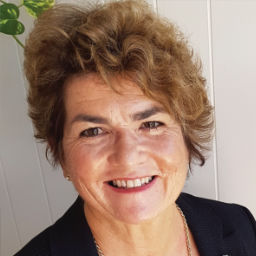
Corporate Psychologist
Deborah Johnston Consulting
- About
-
As an organisational consultant and psychologist with more than 35-years’ experience, Deborah has helped countless individuals, teams and organisations enhance and improve their corporate health and performance.Building capability to respond to always changing circumstances and challenges of today’s world is a key aspect of Deborah’s work.How do we lead in these complex and chaotic times? How do we do this sustainably without trading off parts of our life that are important? Whether it is a new starters, chief executive officers or directors it is clear from Deborah’s experience that people take their responsibilities seriously. However, there is always opportunity to grow, develop awareness of one’s value, skills, and potential. This includes leadership of self and others to successfully achieve organisational goals. We are human first! With a wealth of experience as a coach, a lecturer, a counsellor and a senior manager, she has worked extensively with all tiers of government across Australia, as well as private and not for profit organisations. She has new and unique insights into leadership, the challenges we face, the mindsets and the skills we need, and the practical steps we must take to be successful in todays’ world.With a strong focus on action learning, Deborah’s focus is on building capability at both the individual and the system level to meet these challenges. Deborah has a pragmatic focus on what is real and pressing and uses the latest research and engaging processes to meet client needs. People find participation easy, learning enjoyable and report high levels of gain from working with Deborah.


Found this article useful or informative?
Join 5,000+ not-for-profit & for-purpose directors receiving the latest insights on governance and leadership.
Receive a free e-book on improving your board decisions when you subscribe.
Unsubscribe anytime. We care about your privacy - read our Privacy Policy .