
leadership
Thriving in Chaos - Why Adaptability Is Becoming the Defining Capability
Published: August 30, 2026 Last Reviewed: August 31, 2026
Read Time: 8 minutes

For decades, leadership capability was often assessed through two dominant lenses: IQ and EQ. IQ measured analytical capability while EQ focused on knowing oneself and understanding others. Both remain critically important.
But in today’s environment, particularly across the disability and aged care sectors, they are no longer enough on their own. A third capability is rapidly emerging as equally important: AQ: Adaptability Quotient.1
Because the uncomfortable reality is this; organisations are no longer operating in stable environments where long-term plans unfold predictably. They are operating in systems defined by constant disruption, shifting policy settings, funding uncertainty, workforce pressures, regulatory escalation, and changing community expectations.
In other words, they are operating in chaos; not disorder in the dramatic sense - but ongoing uncertainty, ambiguity, and continual change. The organisations most likely to not just survive but thrive in this environment will not necessarily be the largest, oldest, or even the most technically capable.
They will be the most adaptable.
The VUCA Environment Has Arrived
While VUCA (Volatility, Uncertainty, Complexity and Ambiguity) has existed for years, for many executives in human services, it’s moving from theory to lived experience.
Disability and aged care providers are now confronting evolving reform agendas and compliance frameworks, inflationary cost pressures accentuated by workforce shortages, increased scrutiny and expectations from both regulators and clients, as well as funding uncertainty and rapid technological change.
What makes this environment especially difficult is that many of these pressures interact simultaneously. A funding adjustment influences workforce decisions, workforce shortages affect compliance risk, compliance failures influence reputation and so on.
Systems are becoming highly interconnected and increasingly difficult to predict. Traditional management approaches - based on stability, long planning horizons, and incremental change - begin to struggle under these conditions.
The assumption that “things will settle down soon” is dangerous, because in many sectors, continual change is no longer temporary disruption. It is the new operating environment.
The Limits of Traditional Models
In highly dynamic sectors, leaders frequently face situations where, information is incomplete, government policy is murky, reforms evolve mid-implementation, stakeholder expectations conflict, financial models are unsustainable and risks emerge faster than governance cycles can respond.
Under these conditions, executives who rely too heavily on certainty can become paralysed, defending outdated strategies long after conditions have changed. Others fall into excessive caution, delaying decisions while waiting for clarity that never arrive. Some simply burn out under the psychological pressure of continual disruption.
This is where AQ becomes critically important.
What Is AQ?
It is the capacity to adjust, evolve, recover, respond and remain effective amid changing circumstances. It is not simply resilience. Resilience is about absorbing pressure and recovering from setbacks. Adaptability goes further. It is about learning quickly, adjusting assumptions, responding constructively to disruption and maintaining strategic direction while changing tactics.
Importantly, high AQ leaders are not reckless or reactive. They do not change direction every week. Rather, they develop the ability to distinguish between core purpose that should remain stable, and operating models that must evolve.
That distinction matters enormously in the NFP and care sectors.
Because while policy settings may shift repeatedly, organisational purpose often should not. The mission remains constant. The methods may need to change dramatically.
Executives in sectors such as disability and aged care now operate in environments where external decisions can materially alter business models almost overnight.
A single government announcement can affect pricing structures, workforce requirements, reporting obligations, compliance expectations, service viability and funding sustainability.
People generally enter these sectors because they care deeply about mission and social impact. That commitment remains a strength. Unfortunately, mission alone does not protect organisations from systemic disruption. One of the growing risks in the sector is that emotionally committed leaders can become psychologically anchored to historical operating models; “We’ve always done it this way.”, “Our clients expect this.”
The organisations that adapt early often gain stronger partnerships, enhanced credibility with funders and regulators, improved reputations and eventually stronger financial sustainability. The most likely outcome for those organisations that don’t is some form of consolidation. That may sound harsh, but it reflects a growing reality across many human service sectors.
There is an important distinction between adaptability and abandoning organisational identity. True adaptability requires disciplined flexibility.
High AQ organisations typically maintain a clear sense of purpose, stable governance principles, and disciplined risk management but they are also willing redesign structures and services, invest in new capabilities and technologies, partner differently, and rethink long-standing assumptions.
In practical terms, they become strategically flexible without becoming mission fickle.
The Psychological Side of Change
One of the least discussed aspects of leadership in a VUCA environment is the emotional toll. Continual uncertainty creates cognitive fatigue across the organisation, and that is where EQ2 matters.
Executives are expected to make decisions with imperfect information while simultaneously managing workforce anxiety, board expectations, client concerns, and regulatory scrutiny. Over time, this can create decision exhaustion, organisational stagnation and sadly skills leaving not just an organisation but the entire sector.
High AQ leaders accept that ambiguity is unavoidable. Rather than seeking perfect certainty, they focus on things such as improving organisational responsiveness, shortening learning cycles, strengthening scenario planning, building adaptable cultures, decentralising problem solving, and maintaining emotional composure during instability. In many ways, EQ supports and enhances AQ.
An organisation cannot become adaptable if its culture punishes innovation and adaptation. A psychologically safe3 environment that promotes challenging assumptions and out-of-the-box thinking while tolerating a certain level of failure, is pretty much a foundation for building AQ.
Many organisations unintentionally create cultures where structure and hierarchy diminish psychological safety. Under pressure, these organisations become even more rigid, which can be dangerous in volatile environments.
An adaptable organisation does not mean weak governance or reducing accountability. In fact, high adaptability often requires stronger governance discipline because change itself introduces new forms of risk. The key is creating governance systems capable of enabling adaptation rather than preventing it.
AQ is not just an individual leadership trait, it is also an organisational capability.
Impact of Cultural Background
Cultural background can also influence adaptability. Leaders raised in stable “Western” societies, with strong institutions, predictable systems, and structured environments, may be less accustomed to operating amid continual uncertainty and disruption. By contrast, individuals from the “Developing” world, often grow up navigating economic volatility, institutional instability and rapidly changing conditions where adaptability becomes a daily survival skill. This can foster resilience, improvisation, and comfort with ambiguity. While no culture produces inherently “better” adaptive individuals, different lived experiences can shape how comfortably executives respond to chaos, uncertainty, and rapid change.
Beyond Surviving to Thriving
There is a tendency in difficult environments to focus purely on survival, but chaos also creates opportunity if you are adept at navigating chaos. Periods of major disruption often reshape industries. New leaders emerge, new service models develop, technology accelerates and those who were willing to take considered risks reap the rewards.
Organisations with strong adaptability frequently gain disproportionate advantage during these transitions because they move earlier, learn faster, and respond more effectively. That does not remove the risk or the difficulty, nor does it minimise the very real pressures currently facing disability and aged care providers.
It is also a fact that some organisations cease to exist or consolidate with others. That is the fundamental nature of disruption and renewal. But uncertainty itself is not necessarily the greatest threat, in many cases, the greater threat is organisational rigidity.
Final Thoughts
IQ was always important. EQ remains essential. However, in an era defined by VUCA, AQ is increasingly become the differentiator between organisations that merely survive (or even die) and those that emerge stronger from it.
The future is unlikely to become simpler. Change will not slow down. Policy environments will continue evolving. Technology will continue reshaping service delivery. Societal expectations will continue to morph.
Key takeaways for organisations that are determined to navigate this chaotic landscape:
- Build (the required) Organisational Culture: AQ in the organisation cannot be limited to the board or the ELT.
- Be Aware and Assess: Take the time to understand and assess the (chaotic) environment. Charging in and shooting from the hip is not a strategy.
- Develop EQ: Navigating chaos requires emotional resilience; being comfortable with discomfort.
- Review Your Risk Appetite: Thriving in chaos requires considered risk taking.
- Be Deliberate: Build adoptability into your organisational strategy.
The organisations that thrive will not be those waiting for stability to return. They will be those that learn how to lead despite the chaos.
A shortened version of this article was first published in the 2026 Better Boards Conference Magazine.
Further Resources
Cultural Intelligence (CQ) for Not-for-Profit Organisations
What Are Your Leadership Anchors?
Can Boardroom Leadership Meet the Challenges of the Future?
How Do Australians View the Leadership and Governance of the Charity Sector
Mindfulness in the Australian Boardroom - Do Less and Accomplish More!
Adaptive Governance… Transformational Leadership
-
For a more in-depth understanding, see article by Dr. Jason Walker in Forbes magazine (https://www.forbes.com/sites/jasonwalker/2026/02/09/aq-is-the-new-eq-why-adaptability-now-defines-success/) ↩︎
-
see Dr. (Prof.) Amy C Edmonson’s “The Fearless Organization: Creating Psychological Safety in the Workplace for Learning, Innovation, and Growth” (https://www.amazon.com/Fearless-Organization-Psychological-Workplace-Innovation-ebook/dp/B07KLT8RKM) ↩︎
Share this Article
Recommended Reading



Recommended Viewing



Author

-
Treasurer, Immediate Past Chair
MADEC Ltd
- About
-
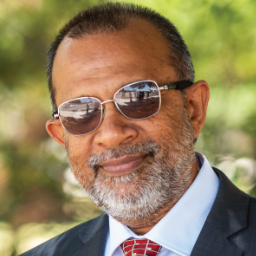
A strategy and finance professional, Stephen counts significant experience with Strategy Formulation, Business Transformation, Technology Enabled System Improvements, and Data Analytics for Improved Decision Making.
Stephen also closely monitors socio-economic and geo-political trends and developments and follows commentary and research on these topics by authoritative sources from around the world.
At Mackay Regional Council, Stephen played a key role in implementing Australia’s first fleet wide roll-out of smart water meters, one of the earliest successful smart city initiatives in the country. As an extension of this project, Stephen was instrumental in developing a Meter Data Management (MDM) system, for managing smart water meters as well as smart sewer sensor data. The system, which was spun-off by Mackay, is currently the country’s leading MDM system for water utilities.
During his career, Stephen has also had the opportunity to undertake several significant cultural change programs. He is a strong believer in the power of collaboration and strives to create inclusive and safe team environments.
In addition to his management accounting and CPA qualifications, Stephen also holds a Master of Business Administration (MBA) degree from the USA and is also a Graduate of the Australian Institute of Company Directors (GAICD).
Some of Stephen’s other claims to fame include, climbing up to Base Camp 1 on Mount Everest, being an Advanced Open Water SCUBA Diver and graduating from the American School of Bartenders.
At the time of writing, Stephen is the Director of Corporate Services at Swan Hill Rural City Council (in Victoria, Australia). He is the former Chair and current Treasurer of the Board of MADEC, a for-purpose organisation supporting persons with special abilities in Central Queensland.


Found this article useful or informative?
Join 5,000+ not-for-profit & for-purpose directors receiving the latest insights on governance and leadership.
Receive a free e-book on improving your board decisions when you subscribe.
Unsubscribe anytime. We care about your privacy - read our Privacy Policy .